The New Wave of Event Interactivity

Speaker on stage. Slides on screen. Audience in rows.
You listen. Maybe take a note or two. Then you head to the next session and do it again.
But that format is starting to feel … boring.
Today’s audiences don’t want to sit through a monologue. They want to test ideas, shape them, react to them. They want to take part in what’s happening in the room.
Across industries, events are shifting from passive programming and toward something more participatory. Sometimes subtle. Sometimes wildly immersive.
Event teams have already experimented with plenty of interactive formats. But the next wave is pushing even further, turning audiences into collaborators, creators, and co-conspirators in the experience.
Here are a few of the techniques catching our attention right now.
Multiplayer Keynotes
One of the clearest and most fun signals of where events are heading is “multiplayer keynotes.”
And no, we’re not talking about live audience polls. We’re talking about presentations fully built by and for the people in the room.
Experiences like VisuAlse Futures, created by futurist Henry Coutinho-Mason, turn the audience into content contributors.
How it works:
- Attendees are invited to sketch an idea. Like a 2035 product or their “dream client” for the future.
- AI converts those doodles into polished visuals and strategic concepts.
- Outputs are displayed live, forming an idea gallery shaped by the room.
- The platform identifies patterns across submissions and gives organizers a real-time view of collective thinking.
Part keynote, part workshop, part intelligence engine. This shifts authority from the stage to the audience and, more often than not, shines a light on ideas that executive leaders haven’t even thought about. Talk about shared power.
Improvised Sessions
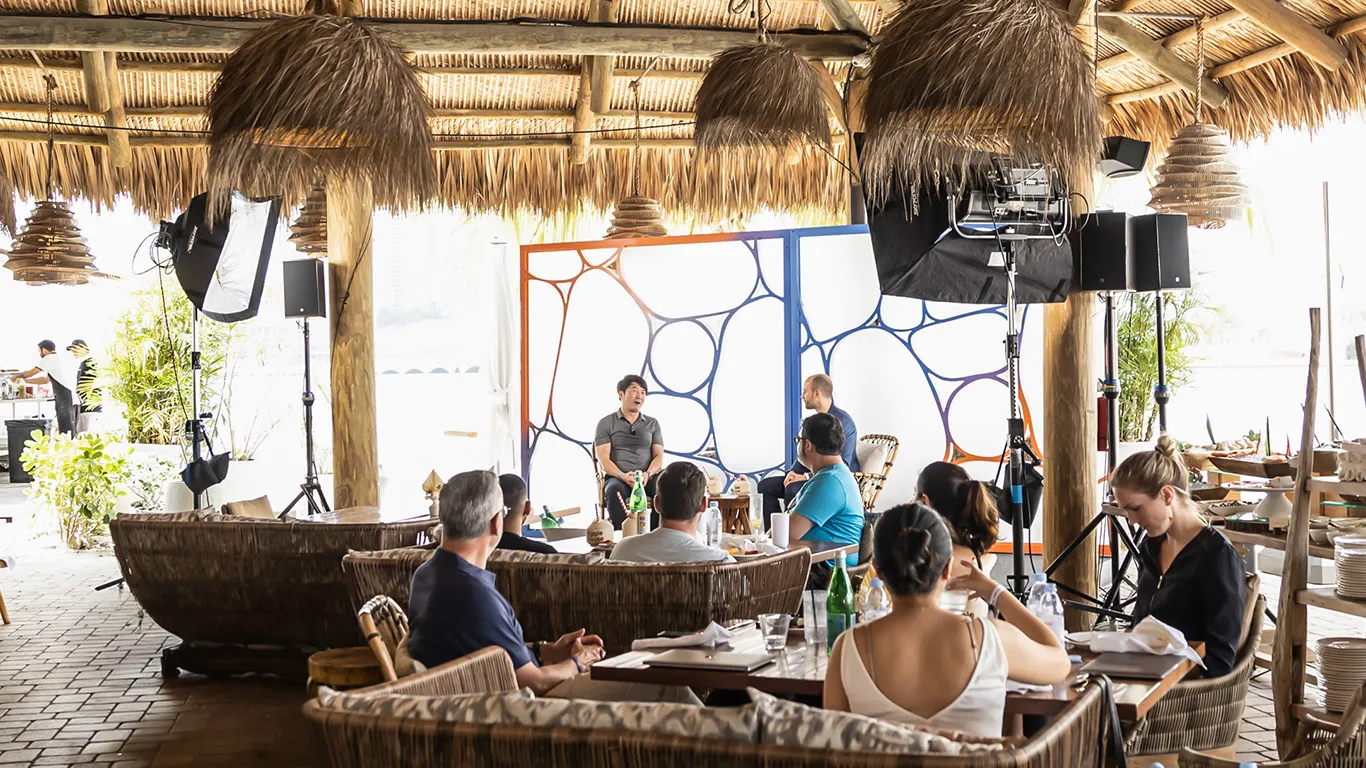
More event teams are moving away from tightly scripted presentations and toward new formats that leave room for spontaneity. More voices on stage. Less polish.
We’re seeing:
- In-the-round stages that bring speakers closer to the audience
- Looser formats that invite real conversation
- Playful mechanics that introduce unpredictability
Authenticity is the name of the game. Living room stage aesthetics. CEO hot wing challenges. Playful participation.
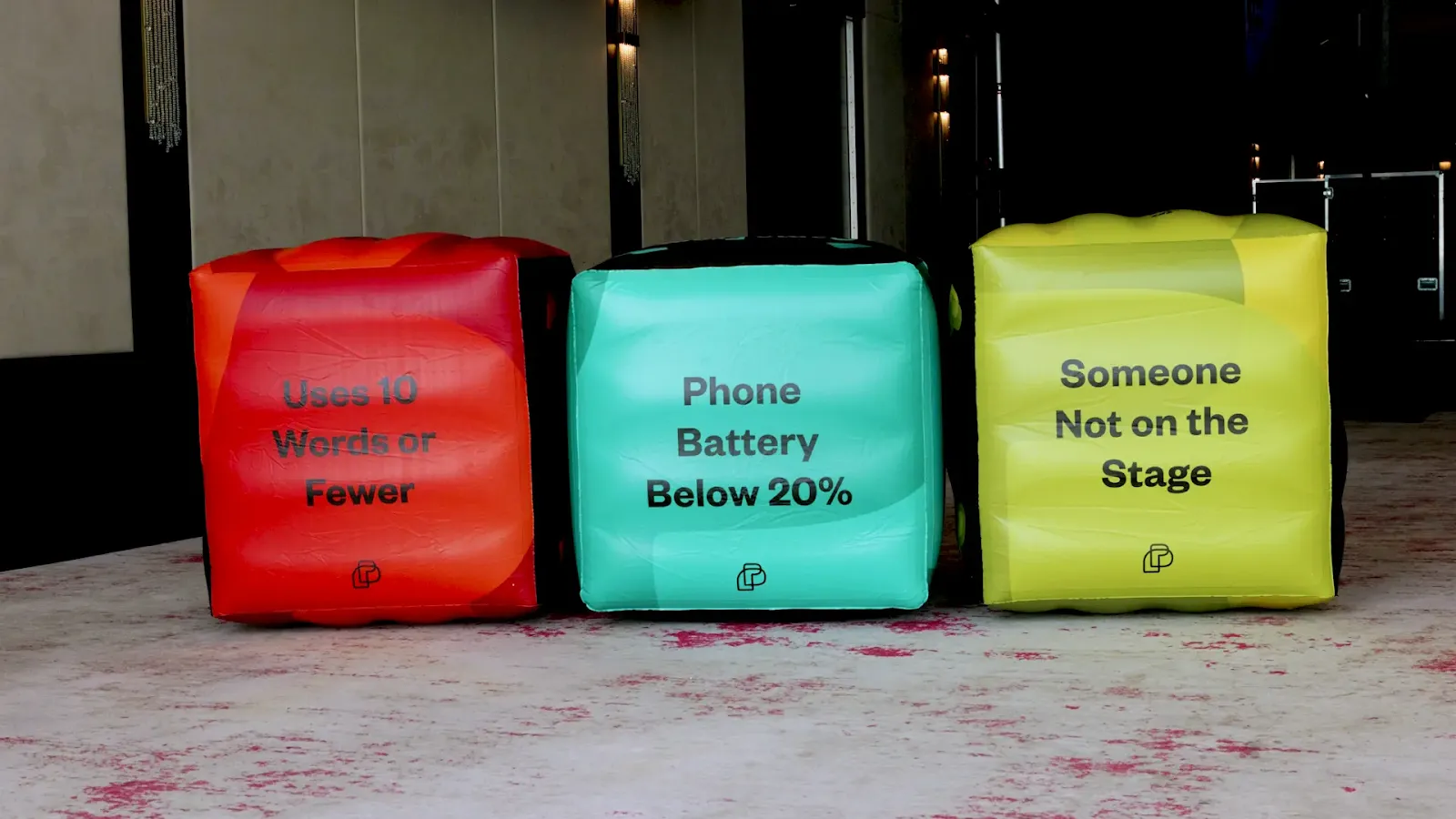
One Projectory concept called RollPlay uses oversized dice to determine who asks the next question and how the panel responds. It sounds simple, but it changes the rhythm of the conversations and keeps everyone paying attention.
Sometimes interaction doesn’t require technology. Just a little unpredictability.
Hands-On Labs and Make/Do Spaces
Another clear shift: attendees want to make something.
Instead of watching traditional product demos, people are sitting down, experimenting, and testing tools in real time. It makes sense. Doing creates deeper memories than watching.
At Canva Create 2025, hands-on labs dominated the experience. Over 60 sessions and 100+ maker activations invited attendees to design and build alongside Canva’s team and partners. They left with something tangible, which drove retention, loyalty, and deeper brand affinity.
Similarly, at Adobe MAX 2025, attendees became collaborators over creator-led labs and AI editing workshops. You’ll often see participants following along on their own devices while a speaker demos something on stage. The room feels more like a studio, and the ideas are sticky.

Spatial Imprinting
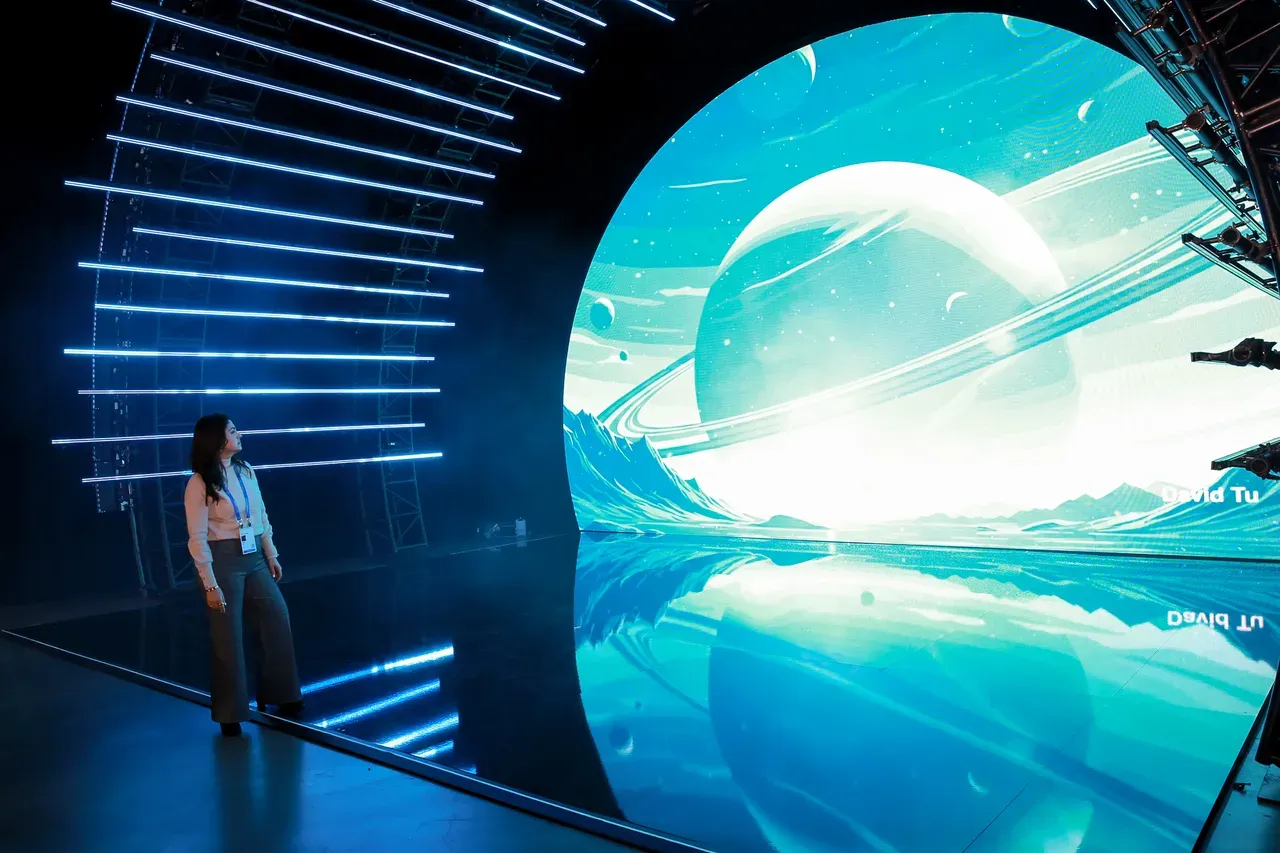
Interaction is no longer confined to sessions. The entire venue is becoming interactive, and people begin to shape the space around them.
Interactive technologies from companies like Gramercy Tech make it a reality. We’re seeing:
- Gesture-controlled displays that let attendees manipulate large-scale visuals
- Interactive maps that evolved based on attendee input
- AI-driven environments built from attendee prompts
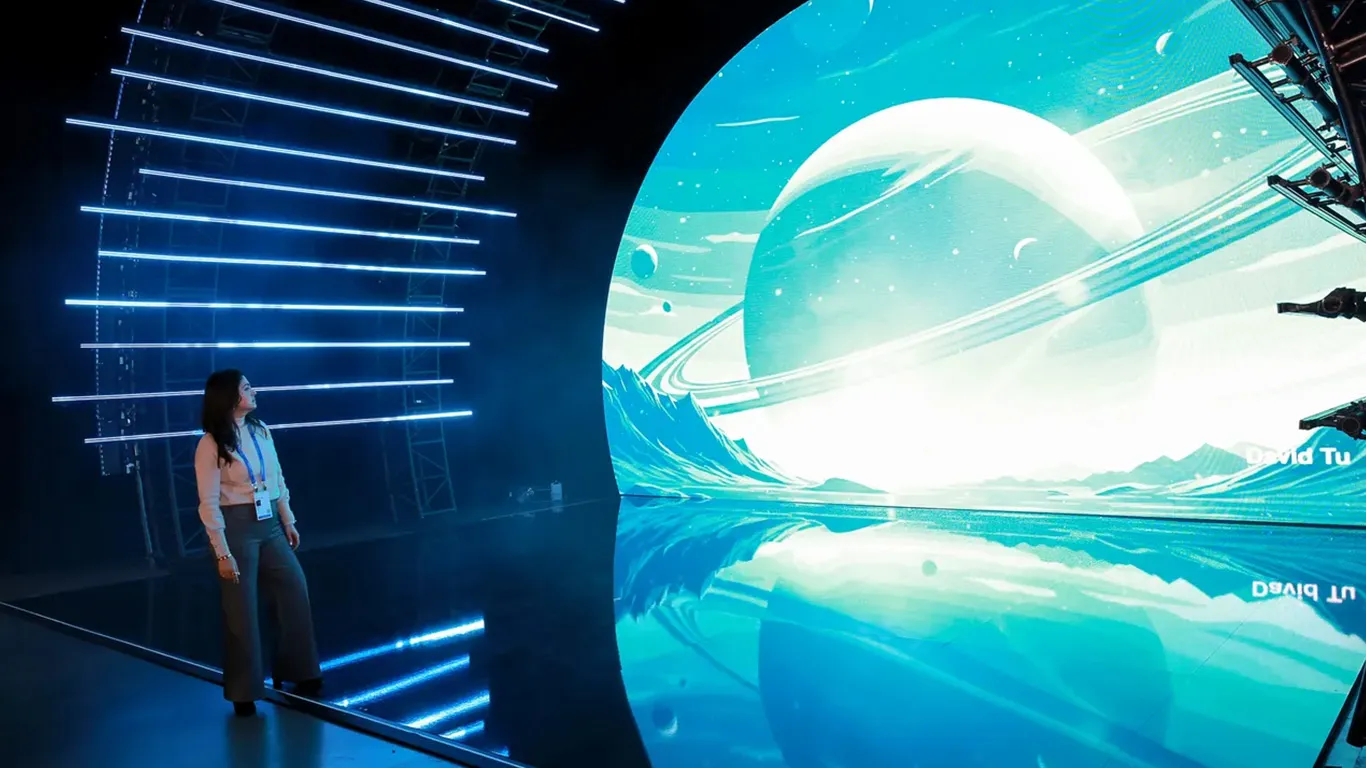
At CES 2025, LED tunnels pulsed with motion-responsive graphics. Projection-mapped installations reacted to visitors as they walked through them. Holographic hosts guided attendees through product ecosystems.
Similarly, last year’s Google Cloud Tech Immersion leveraged AI-generated portals. These installations turned text input into a fully immersive and spatial soundscape projected across massive LED structures.
Spaces like this blur the line between environment and experience. They become something people explore, play with, and shape throughout the event.
Workshops That Actually Deliver ‘Co-Creation’
Keynotes spark ideas, but workshops turn them into something real.
That’s why many events are rebalancing their agendas, shifting about 20% of the agenda from “take” sessions to “make” sessions.
These sessions push participants to debate ideas, solve challenges, and generate outcomes together. Frameworks. Concepts. Commitments.
The room becomes an engine.
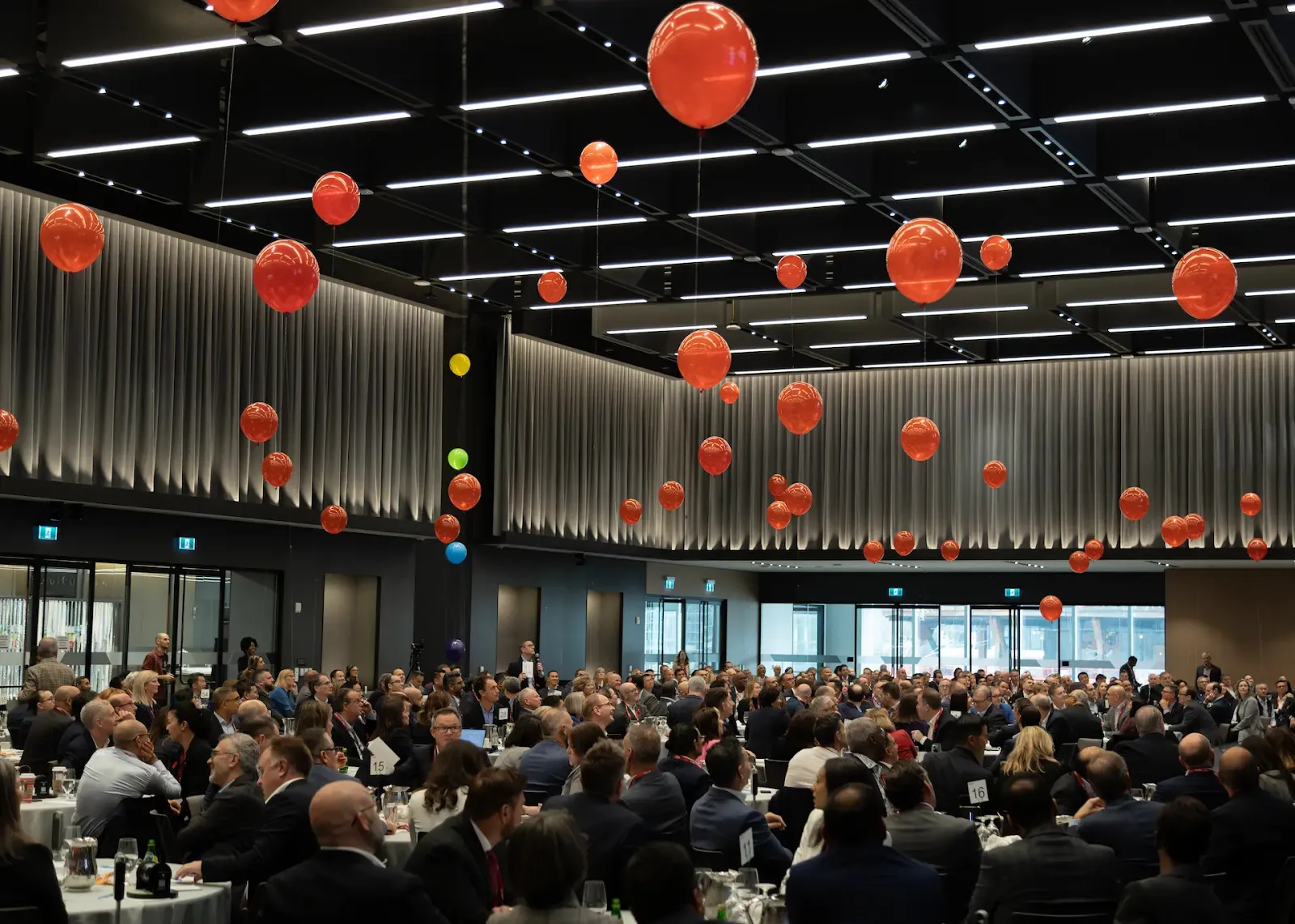
In Projectory’s Floating Opinions workshop, participants discuss big questions at their tables, then visually signal their position by raising or lowering balloons. The room transforms into a living data visualization of collective thinking.
Moments like this shift the energy instantly. The audience stops observing and starts contributing.
Unintentional Networking
Networking has always been central to events.
But the classic cocktail-hour model—walk into a crowded room and hope for the best—doesn’t work for everyone. Especially younger attendees.
That format still has its place, but many events are experimenting with ways to make connection a little easier.
Sometimes that means smaller roundtables or topic-driven discussions. Sometimes it means introducing light game mechanics that give people a reason to start talking.
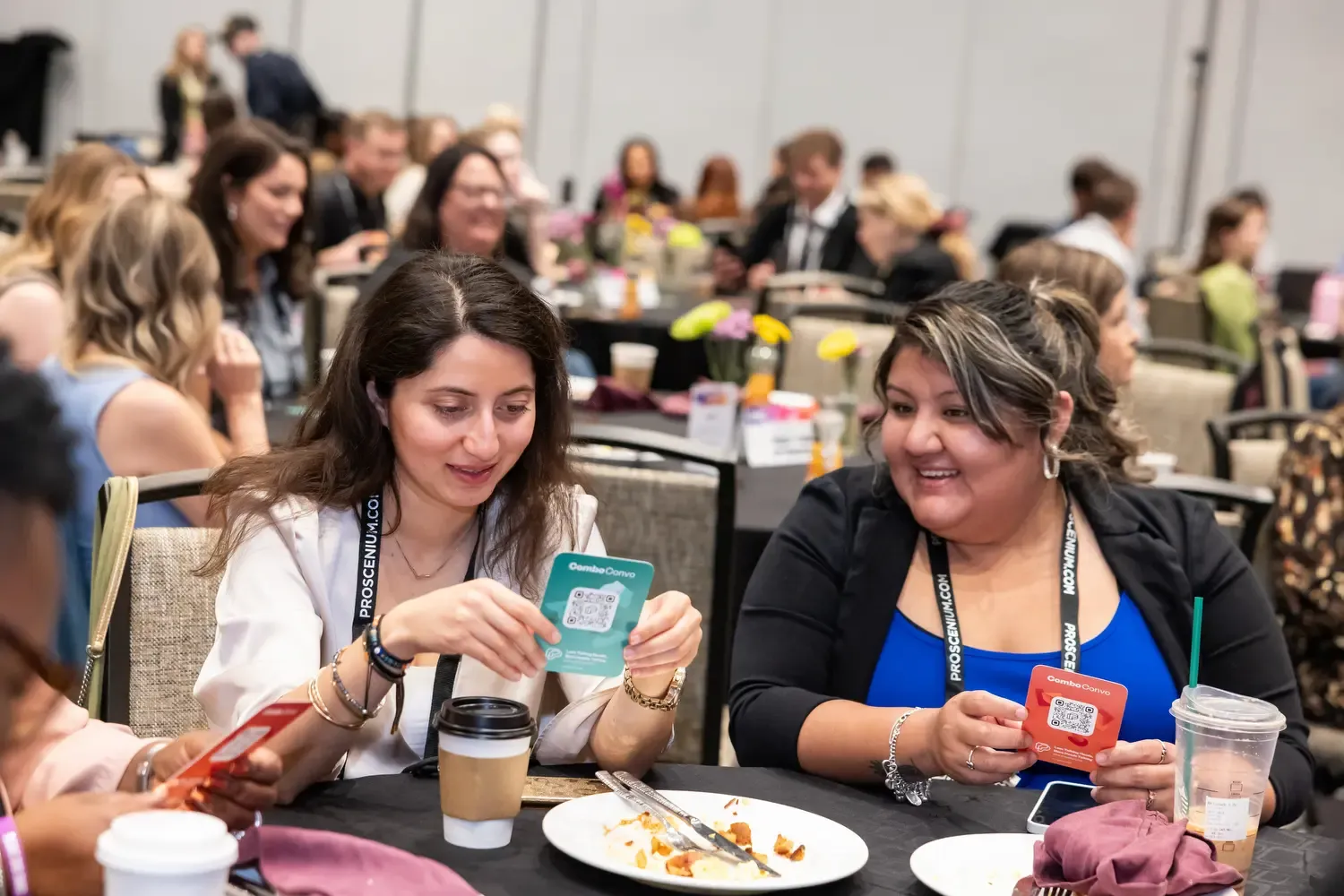
Projectory’s ComboConvo format uses simple prompt cards that attendees combine to generate unexpected conversation starters. The questions are often funny or weird enough that they break the ice immediately.
Instead of trying to “network,” people just start chatting. The connections happen naturally.
Collective Reflection
Not every interactive moment needs to be loud or fast-paced.
Some of the most interesting ones invite people to slow down and contribute something personal.
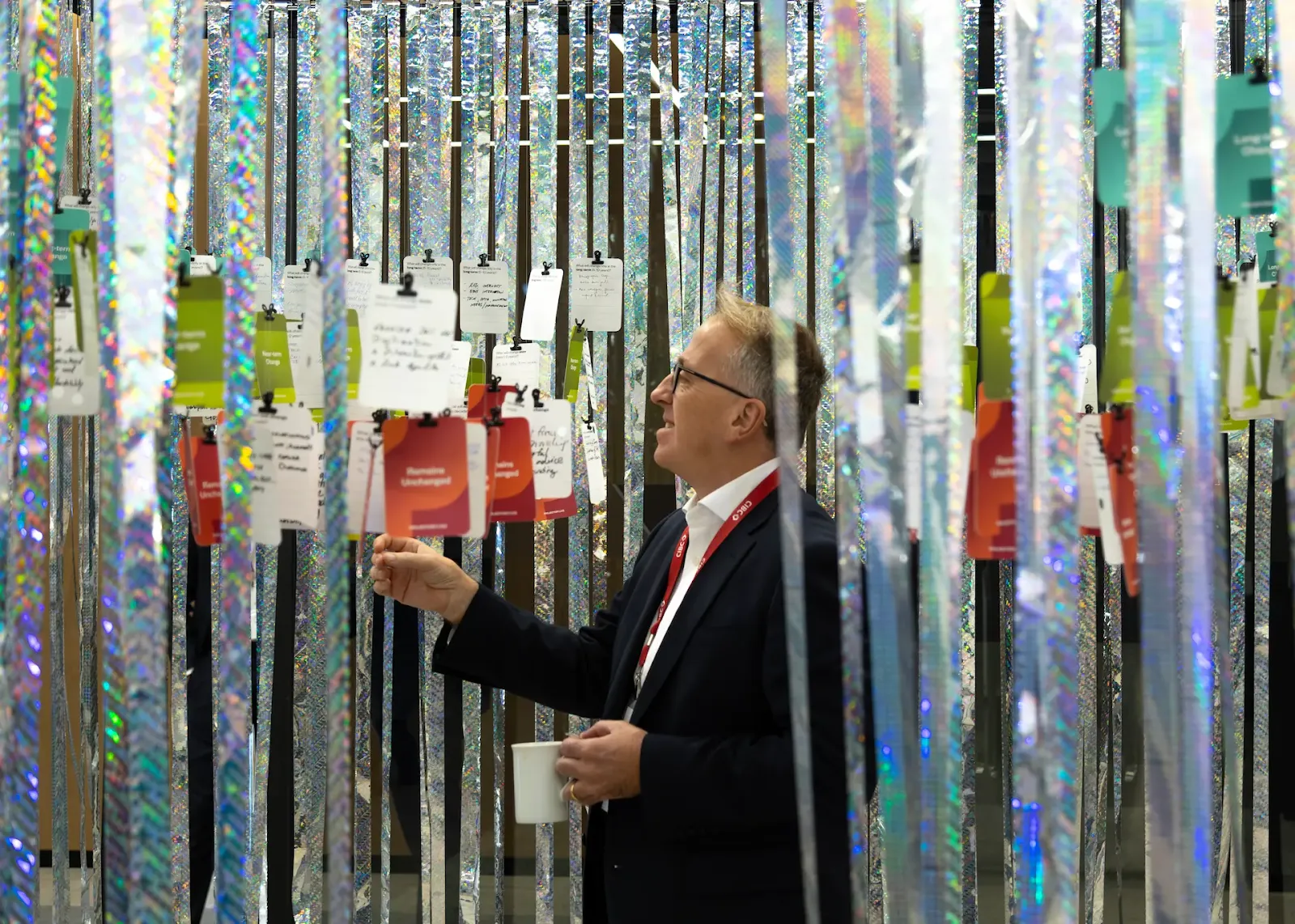
In Projectory’s VisionForest installation, attendees respond to prompts about the future—writing hopes, fears, or predictions on ribbons that are hung from a growing installation. Over time, the space becomes a dense forest of ideas. Every ribbon represents a voice in the room.
It’s simple. But powerful.
You start to see a collective voice take shape.
Other formats invite attendees to complete a shared narrative about the event’s themes—filling in missing phrases or contributing ideas that help summarize what the community has learned together.
These moments feel less like programming and more like collective sense-making.
The Future of Events Is Participation
Not every session needs an app or a game mechanic. And interaction for the sake of interaction rarely works.
But when it’s done thoughtfully, participatory design changes how people experience an event. It invites curiosity. It sparks conversation. It helps ideas land in a way that a slide deck rarely can.
And perhaps most importantly, it gives attendees a sense that they helped create what happened in the room.
That’s the kind of experience people remember.
And the kind they come back for.
By the way, we’re great friends and partners with the folks over at VisuAlse, Projectory, and Gramercy Tech. If you’re ready to bring the new wave of interactivity to your event, let’s talk.